Life on a detailed scale
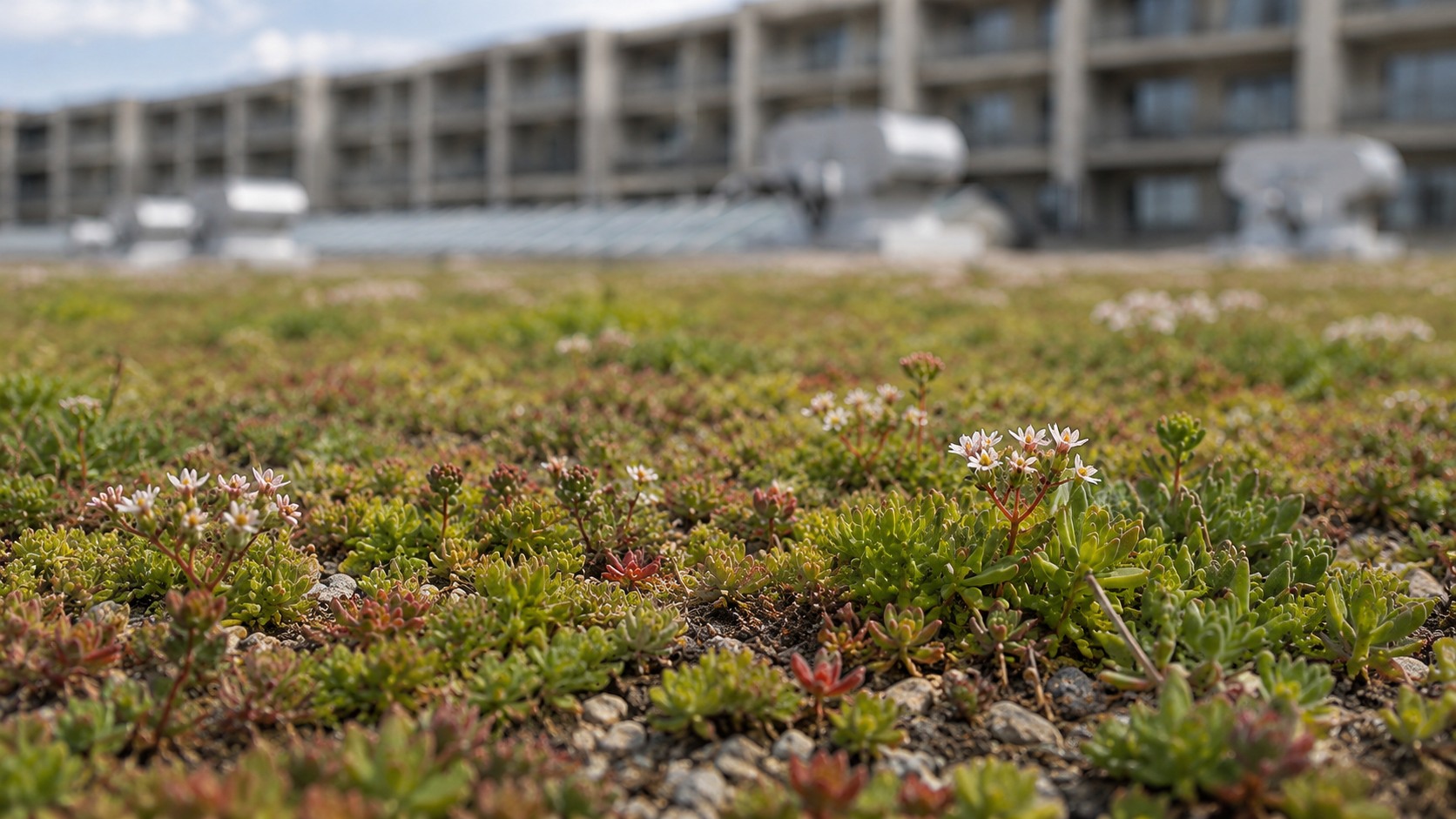
Low plants form a cover adapted to roof conditions. The choice of species, substrate and maintenance is defined according to the project.

Solution
A living fifth façade designed to support biodiversity, manage part of the stormwater and contribute to summer comfort through evapotranspiration.
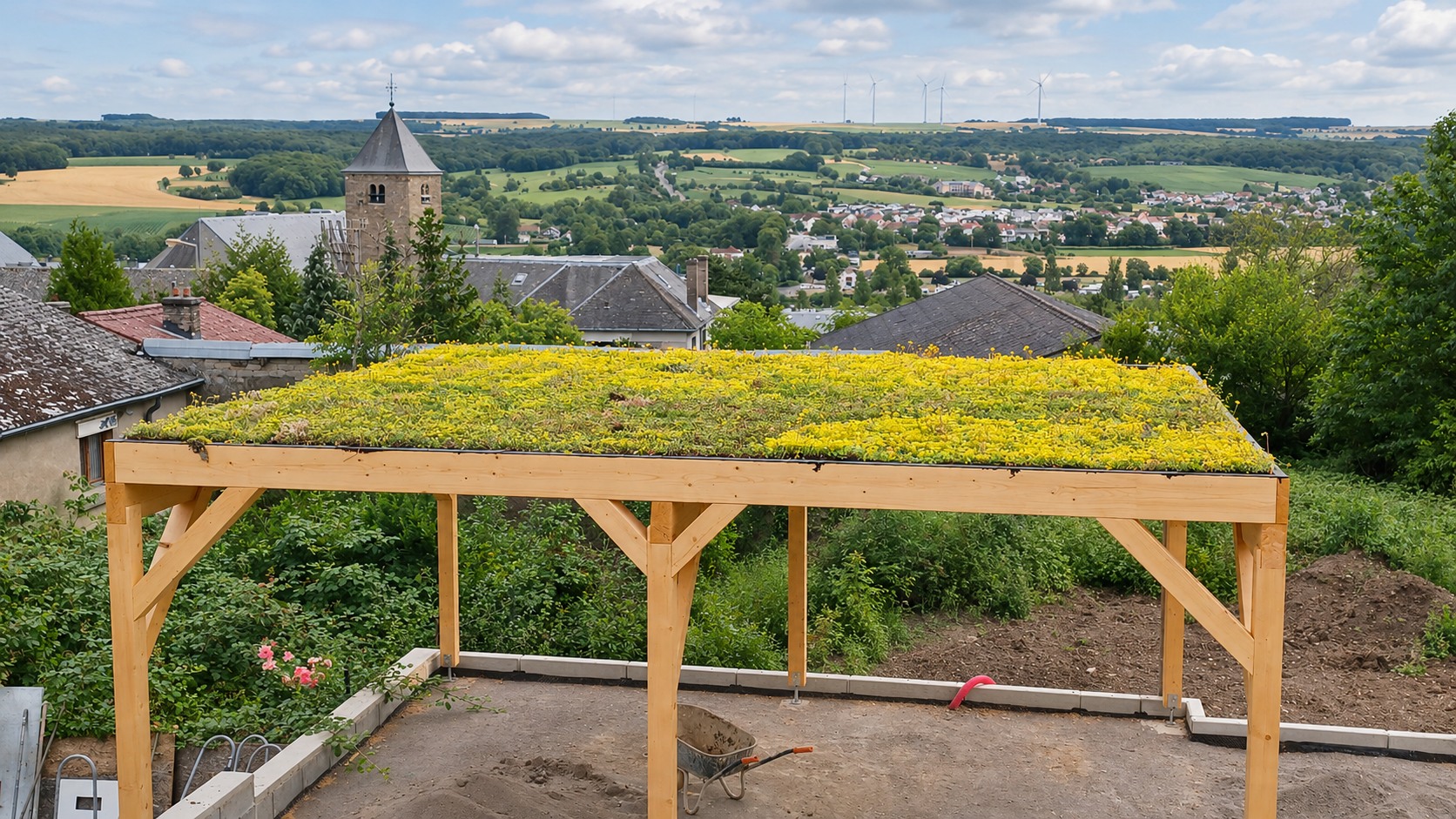
A living fifth façade designed to support biodiversity, manage part of the stormwater and contribute to summer comfort through evapotranspiration.
Revegetation is also part of a reflection on the carbon impact: plants fix carbon during their growth, but the overall balance depends on the system, materials, transport and maintenance over its lifespan. It does not constitute a guarantee of carbon neutrality.
Let’s discuss your projectDiscover the materials, interfaces and the role of each solution.
Low plants form a cover adapted to roof conditions. The choice of species, substrate and maintenance is defined according to the project.
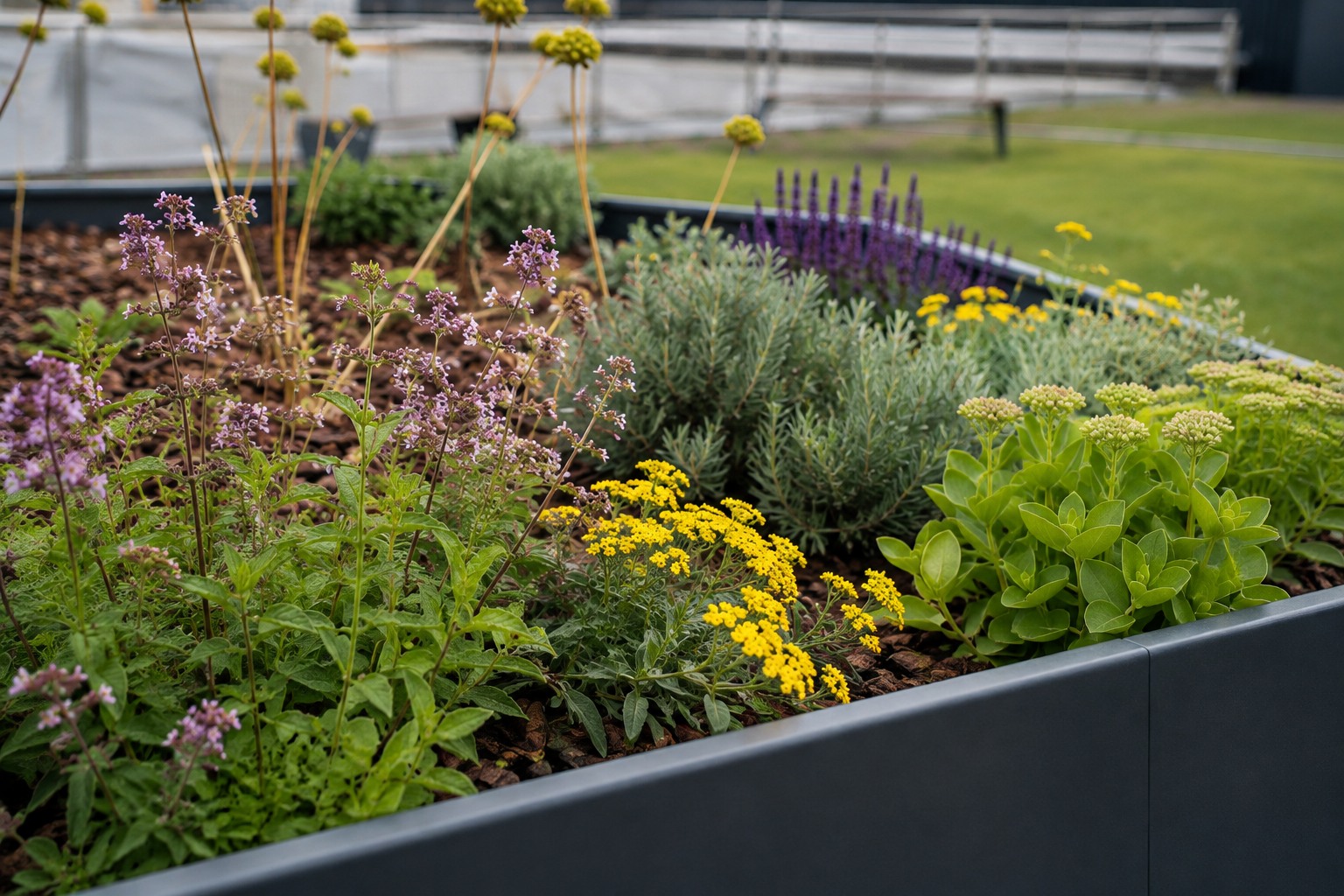
Sedums, flowering perennials and grasses diversify habitats and resources for bees, butterflies and other pollinators. Staggered flowering, species adapted to the site and reasonable maintenance support this ecological function.
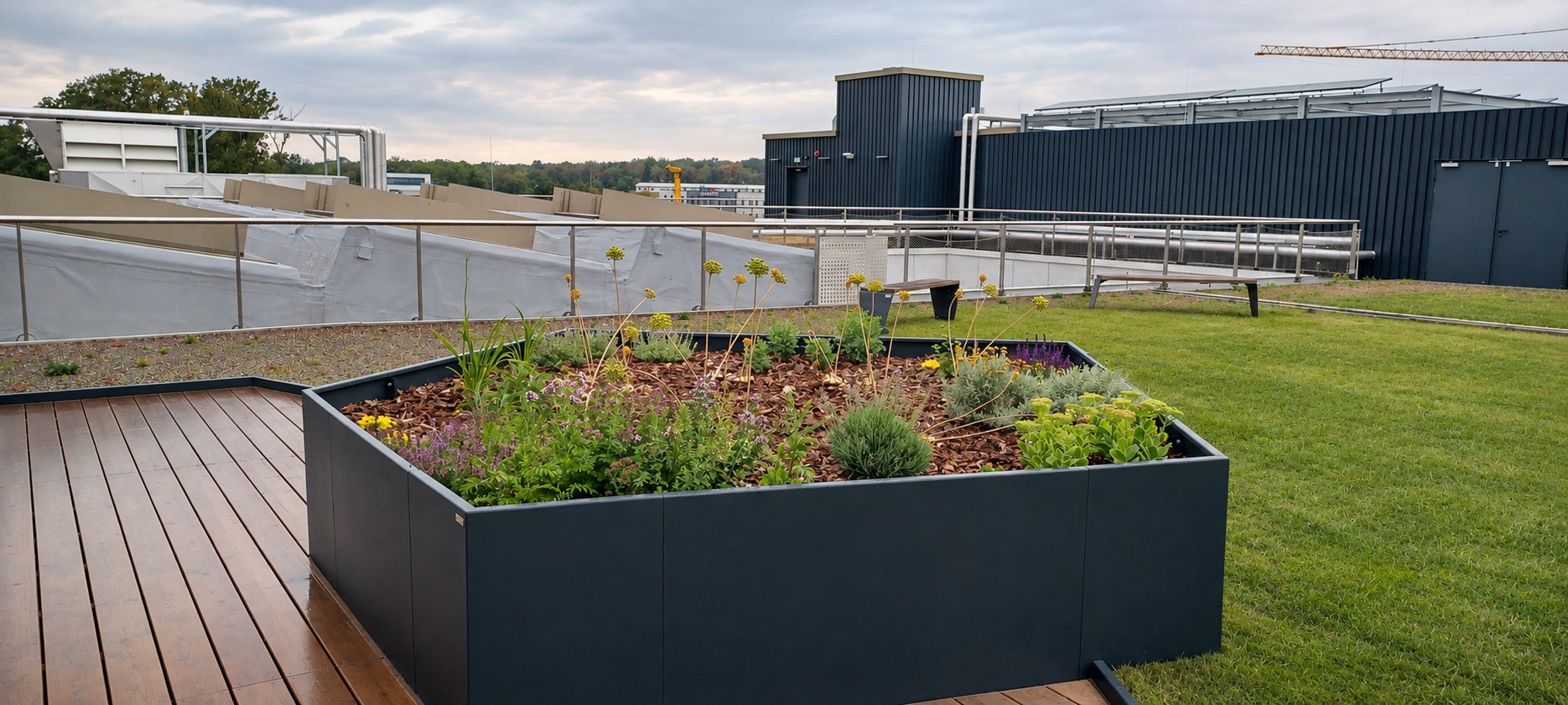
Extensive, intensive and biosolar green roofs serve different uses. The choice depends on load-bearing capacity, slope, exposure, access and planned maintenance. Design connects waterproofing, drainage and filter layers, substrate and plant selection.
We help project teams prepare technical decisions and specifications: roof build-up selection, drainage coordination and, depending on the assignment, hydraulic calculations, solar layout or ballast verification. Solutions are based on building data and the selected systems, including Optigrün systems.
Our Luxembourg portfolio illustrates different approaches to building greening and water management. Construction photographs complement the completed views by showing substrates, components and interfaces. Explore the related projects below to see these arrangements in practice.